
Karl von Lützow’s Comfortable Emptiness
Der goldene HandschuhThis thread traces Karl’s privileged detachment, his attempts to manage desire without intimacy, and the brief moment when he recognizes himself in another person’s judgment.
increasing Bearing strength in each event
 decreasing
Bearing strength in each eventdecreasingPrivilege Without Purpose
Privilege Without Purpose
A life insulated by class
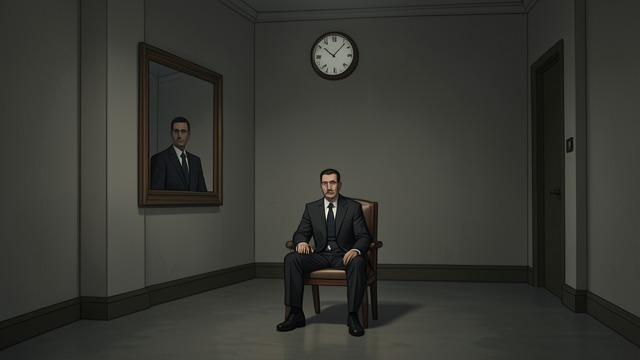
Karl lives with money, a comfortable home, and the inherited certainty that he belongs above ordinary people. His social position protects him from many material hardships, but it offers no clear purpose or convictions to replace them.
He describes himself as perhaps neither good nor bad, but empty. His guiding aim is to move through life with as little pain and obligation as possible, and this avoidance makes isolation feel like a choice he can defend.
Rituals of distance
Karl prefers solitude, dislikes casual encounters, and drinks alone. He treats his gardener, Bogumil, with a mixture of condescension and momentary sympathy, then retreats from the possibility of genuine contact.
His habits reveal a person who has learned to manage people as inconveniences. The comfort he possesses does not make him emotionally secure; it allows him to preserve his detachment without having to confront its cost.
A Sister’s Steadying Presence

A Sister’s Steadying Presence
A dependable routine
Karl meets Margot once a month in Kiel, and the siblings follow a familiar pattern of meals, conversation, and a walk by the Baltic Sea. He values the regularity because it gives their relationship a reassuring shape.
Margot does not interrogate him or demand that he perform a better version of himself. She offers attention without pressure, and Karl recognizes that his life would be worse without her.
A rare ease
Their shared conversations avoid criticism and needless conflict. The siblings take pleasure in surface details and ordinary companionship, creating a space where Karl can briefly feel accepted without being asked to explain himself.
The bond does not resolve his emptiness, but it gives him a humane connection that his other relationships lack. Its steadiness makes his wider isolation more visible by contrast.
Control Without Commitment
Control Without Commitment
Relationships kept at a distance
Karl maintains a succession of sexual relationships while avoiding the commitments his partners might hope for. He treats fidelity and lasting intimacy as constraints, framing his avoidance as an assertion of freedom.
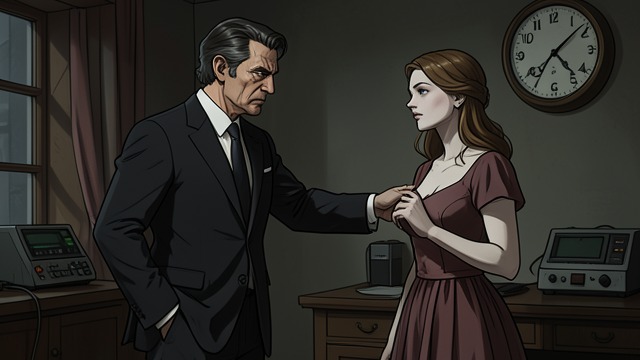
With Frauke, his careful distance gives way to coercive sexual violence. He humiliates and strikes her, then becomes frightened when he realizes that she is genuinely afraid and may seek help.
A temporary repair
Karl’s fear shifts into a strenuous effort to comfort Frauke. He apologizes, cleans her face, and tries to persuade her that the violence was not meant, allowing the scene to end without immediate police involvement.
The aftermath does not amount to a moral reckoning. Karl returns to his patterns of drinking and emotional separation, having treated the crisis as something to contain rather than as proof that he has harmed another person.
A Night of Failed Pursuit

A Night of Failed Pursuit
Seeking novelty
After leaving the family celebration, Karl goes out in search of a woman who might interrupt his familiar routine. In a bar, he meets Claudia and then Anita, relying on listening, flattering attention, and calculated conversation to draw Anita away from her friends.
For a while, the exchange seems promising. Karl turns the conversation toward Anita’s supposed unhappiness, giving her a role in a psychological story that makes the encounter feel more intimate than it is.
A judgment that lands
When Karl places his hand on Anita’s, she withdraws it and calls him a sad, sad man. She returns to her friends, leaving Karl with a judgment he cannot dismiss as easily as the failed flirtation itself.
The words unsettle him because they seem to reach past his polished self-image. He is not merely disappointed that a pursuit failed; he has been briefly recognized as someone whose apparent freedom conceals sadness.
Choosing Withdrawal

Choosing Withdrawal
A chance encounter left unused
At The Golden Glove Tavern, Karl orders two drinks and notices Petra. Their eyes meet, and each privately interprets the other as someone comparatively normal: Karl sees a possible opening, while Petra sees a welcome contrast to the tavern’s surrounding disorder.
Neither acts on the brief recognition. Karl remembers his resolve to stop pursuing chance encounters, and Petra leaves without speaking to him.
Freedom without transformation
Karl walks away in the opposite direction rather than following her. The choice may prevent another impulsive pursuit, but it does not yet produce a new life or a deeper understanding of himself.
His ending remains ambiguous: withdrawal could become a first step toward change, or simply another way to avoid the risks of intimacy. The novel offers no evidence that a single restraint has cured the emptiness that brought him out that night.
During the mid-1970s, before Karl’s birthday visit to Hamburg
On a monthly Saturday visit to Kiel and the Baltic coast
In the months before WH 1’s eightieth-birthday gathering
Late on the night of WH 1’s eightieth-birthday gathering
Near dawn, shortly after Karl enters The Golden Glove Tavern
